A Definitive Guide to Pallet Shuttle Systems
A reference-grade guide to pallet shuttle systems for warehouse operations leaders: how the technology works, where two-way and four-way differ, where shuttles fit and where they don’t, and how to evaluate a system before you buy.
Pallet shuttle systems sit at a specific point on the warehouse automation spectrum — denser than selective racking, safer than drive-in, less capital-intensive than a full unit-load AS/RS. They are not the right answer for every operation. This guide gives warehouse operations leaders, supply chain managers, and facility engineers an engineering-grounded view of the category: what the technology is, how it works, where it fits, and how to evaluate a system on its merits.
What is a pallet shuttle
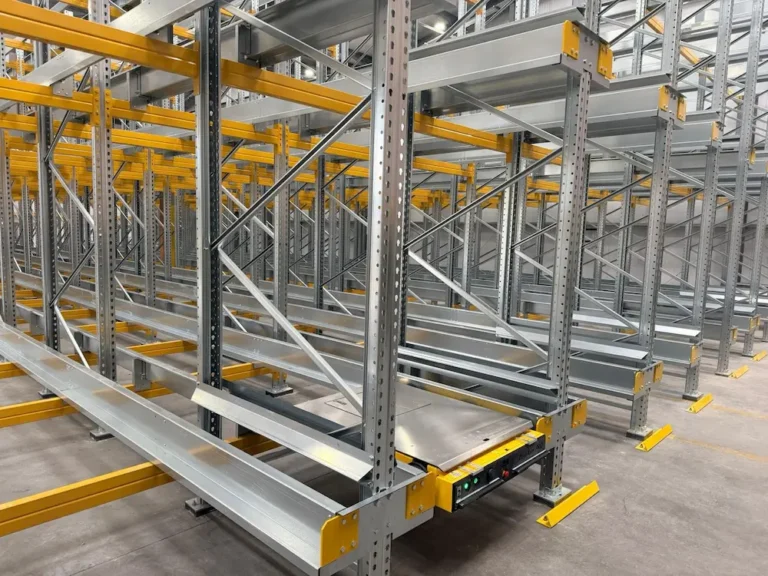
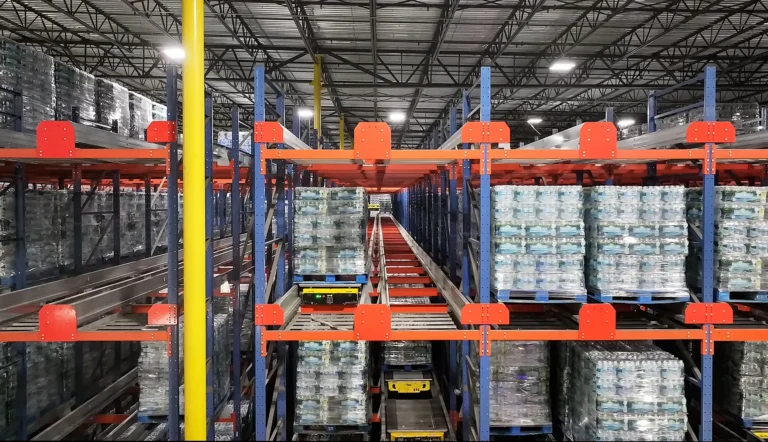
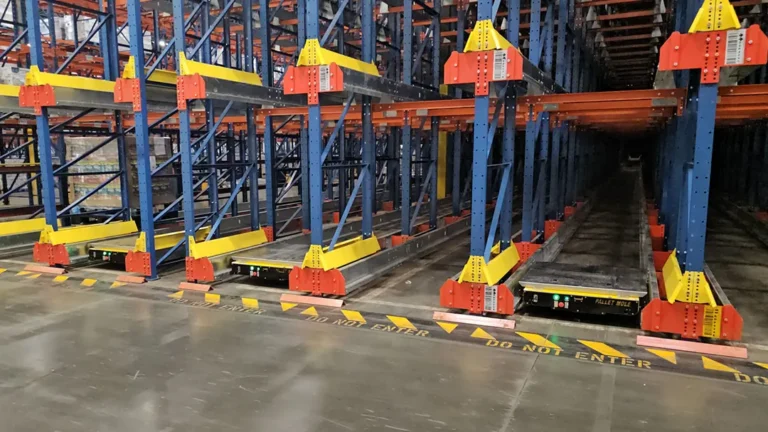
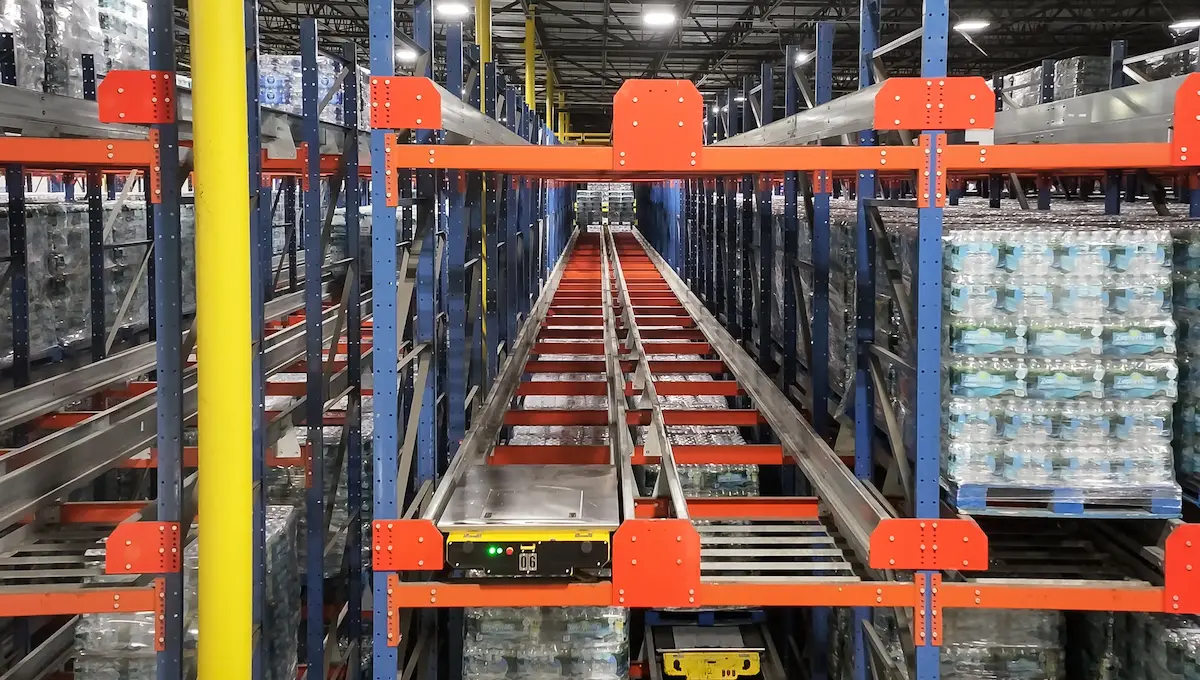
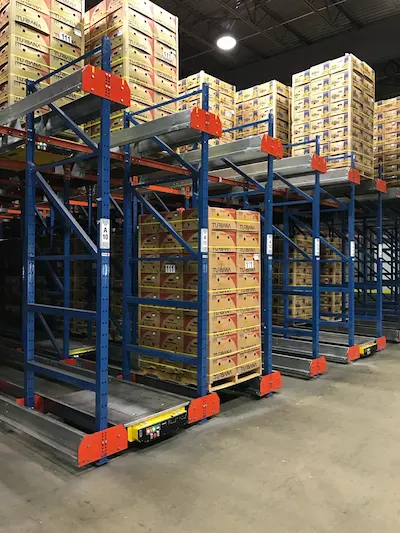
A pallet shuttle is a battery-powered, motorized cart that travels on rails inside a deep-lane racking channel, transporting pallets to and from storage positions on command. The forklift — or, in fully automated configurations, a stacker crane or transfer car — operates only at the lane entrance. The shuttle handles every movement inside the lane.
The technology is classified by the Material Handling Institute (MHI) within the Automated Storage and Retrieval Systems (AS/RS) category, specifically under the Robotic Storage & Retrieval segment[1]. In industry usage, the same equipment may be called a radio shuttle, pallet runner, pallet mole, satellite vehicle, or roaming shuttle.
How the system works mechanically
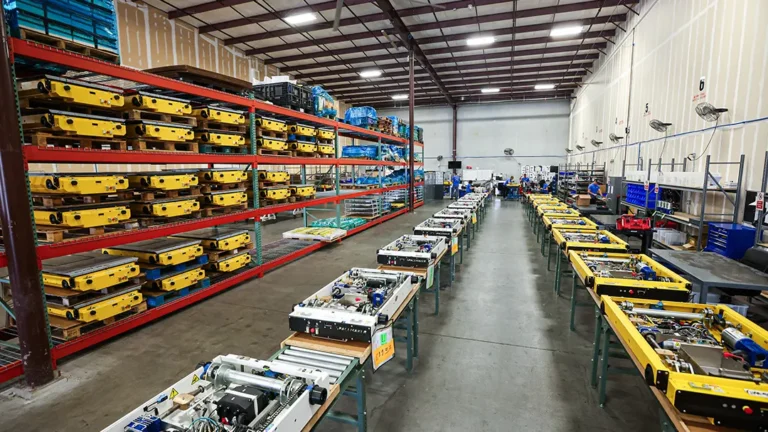
Five components matter to operators. The shuttle car is a low-profile electric platform with drive wheels, a lifting mechanism, load and positioning sensors, and an onboard radio. Standard load capacity ranges from 1,500 to 2,500 kg (3,300 to 5,500 lbs), with horizontal travel speeds of 0.5 to 1.0 m/sec and positioning accuracy of ±10 mm.
Guide rails mount to the racking beam structure. Rail levelness and parallelism are critical — any incline or decline causes the shuttle to either struggle to advance or accelerate uncontrollably on descent. Two standards bracket the engineering envelope. The American Concrete Institute’s F-number system specifies floor flatness for warehouse construction. The Rack Manufacturers Institute’s ANSI MH16.1 governs rack plumbness and structural design — allowing no more than 0.5 inches (13 mm) of deviation per 10 feet (3 m) of rack height in a loaded configuration[2]. Pallet shuttle systems themselves are governed by FEM 10.2.19, the European materials handling federation standard for the design and operation of pallet shuttles.
The lifting mechanism slides beneath the pallet and raises its platform or arms to contact the stringers, clearing the load from the lane rail. Maximum pallet deflection under load must stay under one inch (25 mm) — sag beyond that triggers an operational stop. Pallet quality is a primary engineering input.
The drive and power system uses lithium iron phosphate (LFP) battery packs in semi-automated shuttles, providing 8 to 10 hours of ambient runtime and 6 to 8 hours in cold storage, with 1 to 4 hour charge times[3]. Fully automated systems often use supercapacitors that recharge in seconds during transit on a stacker crane or transfer car.
Control and communication runs through handheld RF remote, tablet Wi-Fi interface, or an integrated warehouse management system. The shuttle’s onboard radio typically has a Wi-Fi range of about 250 feet (75 m), which aligns with the practical productivity plateau of 32 pallets deep.
The problem it solves
Pallet shuttle systems address four problems that compound in high-density storage. Storage density: selective racking typically achieves 40 to 50 percent of theoretical cubic volume, because forklift aisles between every two rows consume floor area; shuttle configurations reach 80 to 90 percent by eliminating in-lane aisles entirely. Throughput: a shuttle cycles a pallet to and from a deep-lane position in 60 to 120 seconds, faster than a forklift can navigate a drive-in lane, with per-module throughput in fully automated configurations scaling significantly when multiple shuttles and lifts operate in parallel — formal throughput modeling for shuttle-based AS/RS uses dual-command cycle frameworks adapted from stacker-crane analysis[7][8]. Labor: the operator places a pallet at the channel entrance and leaves — in freezer environments, this means less time inside the cold zone. Safety: no forklift enters the racking channel, eliminating the drive-in damage profile entirely.
Brief history
Pallet racking in its earliest form dates to the late 1920s. Drive-in racking — the first true high-density configuration — emerged in the late 1960s, maximizing density at the cost of LIFO-only operation and the safety risks of operating equipment inside a rack. Gravity-fed pallet flow racking followed in the late 1980s. The motorized shuttle concept emerged in the 1990s as a direct response to drive-in racking’s core limitation: the forklift inside the channel[10]. By substituting a purpose-built electric vehicle for the in-lane portion of forklift travel, the shuttle preserved drive-in density while removing the safety and damage risks. The technology has since evolved into fully automated configurations integrated with stacker cranes, transfer cars, and warehouse execution software.
By substituting a purpose-built electric vehicle for the in-lane portion of forklift travel, the shuttle preserved drive-in density while removing the safety and damage risks.
Two-way vs four-way — the structural difference
The single most consequential design choice in a pallet shuttle system is whether the shuttle moves in two directions or four. This section is a primer on the engineering difference between the two configurations.
How two-way shuttles operate
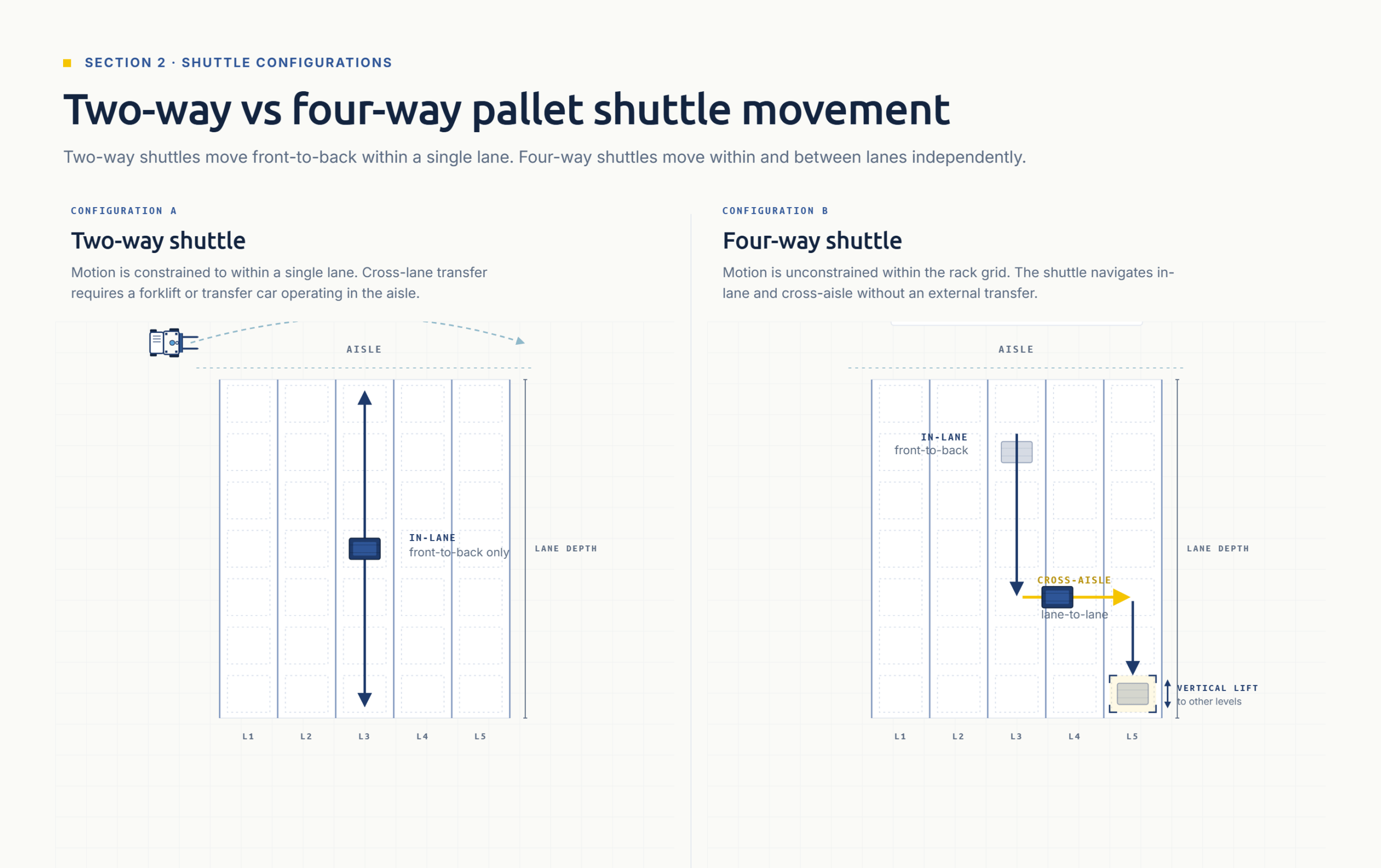
A two-way shuttle moves exclusively forward and backward within a single racking lane. It cannot navigate laterally on its own. To move the shuttle between lanes, an external machine has to carry it: in semi-automated systems, a standard forklift; in automated configurations, a transfer car running on a rail at the aisle end, or a stacker crane.
One important configuration is the mother-child (or aisle-carrier) system. A mother vehicle travels along an aisle rail carrying a child shuttle in a cradle. The mother positions the child at the target lane; the child performs the in-lane pallet handling and returns to the mother for transport to the next lane. The mother vehicle handles cross-aisle and level transport via integrated lifts and elevators, with each level and cross-lane typically supported by its own mother vehicle in larger installations.
How four-way shuttles operate
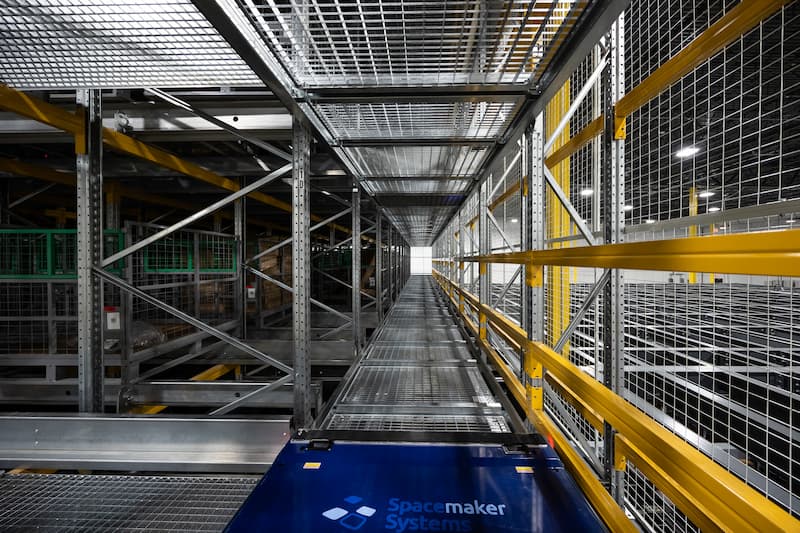
A four-way shuttle adds lateral movement via a second set of perpendicular wheels that raise and lower on command. The shuttle can exit one lane, travel along a perpendicular rail at the aisle end, and enter another lane — without external transport. Vertical travel between levels is handled by dedicated lifts or pallet elevators that either move pallets up and down to a stationary shuttle, or carry the shuttle itself between levels to access any position in a multi-story racking grid. Fleet management software coordinates positions, task assignments, and charging schedules across all shuttles simultaneously, with the WES and WCS layers managing system orchestration.
Engineering implications
The structural difference matters. A two-way racking system uses standard deep-lane structure: longitudinal rails at every storage level. A four-way racking system adds a lateral rail network at the aisle end of every lane on every level — additional structural steel, additional engineering complexity, and tighter installation tolerances across more interfaces. The shuttle itself is also more complex in a four-way configuration, with the perpendicular wheel-lift mechanism, cross-aisle navigation sensors, and more demanding control logic adding cost and maintenance surface area.
Fleet redundancy works in opposite directions. In a two-way system, if a shuttle fails, the lane or aisle it served becomes unavailable until service. In a four-way system, fleet management software reroutes other shuttles around the failed unit. Two-way systems, particularly mother-child configurations, work best in rectangular footprints with consistent aisle lengths; four-way systems adapt to irregular shapes, building columns, and other physical obstacles.
Operational profiles each is suited to
Two-way systems are engineered for high-volume, same-SKU deep lanes — environments where many pallets of identical product fill each channel and predictable throughput matters more than selectivity. Beverage manufacturing buffer storage, cold-chain inbound staging, and production-to-distribution buffers are common fits.
Four-way systems are engineered for mixed-SKU operations — environments where the same racking grid holds a wider variety of products and the cost of dedicating a deep lane to a slow-moving SKU is prohibitive. Throughput per individual shuttle is lower because of the additional lateral travel, but total system throughput scales by adding shuttles to the fleet without structural modification.
Both configurations can operate semi-automated or fully automated. The two-way vs four-way distinction is structural; the manual vs automated distinction is about who or what places the shuttle at the lane entrance and issues commands.
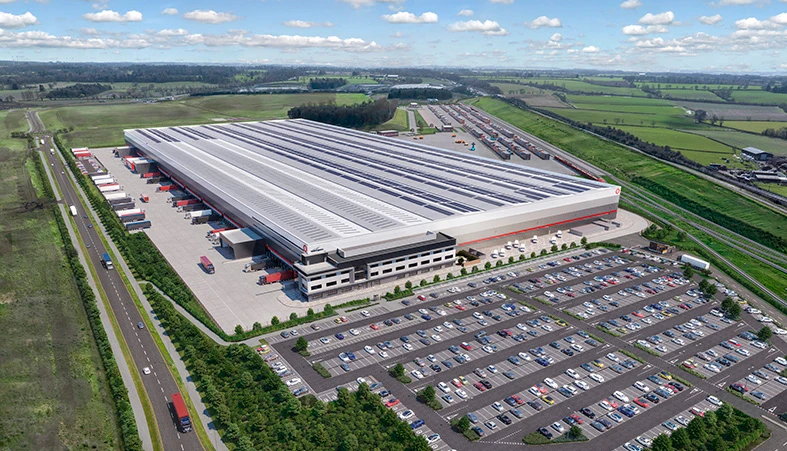
Pallet shuttle systems scale across a wide range of deployments. At the high end, fully automated multi-shuttle fleets integrate with warehouse management system (WMS), warehouse execution system (WES), and warehouse control system (WCS) layers to coordinate complex storage and retrieval operations. At the low end, a single shuttle operated by RF remote and dropped into existing racking is a complete and valid configuration — and a path many operations use to add density without rebuilding. Some providers focus on one end of the spectrum; others deploy across the full range, from single-shuttle drop-in replacements to multi-level four-way fleets. Not every installation requires every layer; sizing the system to the operation matters more than reaching for the most automated configuration.
Where pallet shuttles fit
A pallet shuttle system is the right answer when an operation has high-volume, high-density storage needs and a manageable number of SKUs with enough pallets per SKU to fill deep lanes efficiently. It is the wrong answer in several specific situations.
Within the category, two-way and four-way configurations fit different operational profiles. Two-way shuttle systems are the default choice for high-volume operations with relatively stable SKU profiles — environments where the same product fills entire deep lanes and throughput per lane is the primary metric. Cold storage bulk buffering, food and beverage staging, and production-to-distribution buffers all typically run two-way.
Four-way shuttle systems fit operations where SKU diversity, direct access to inventory, and flexible storage allocation matter more than peak per-lane throughput. They suit large distribution centers with broad SKU ranges, e-commerce fulfillment, pharmaceutical and healthcare distribution, and any operation where dynamic location allocation outweighs the cost of dedicated deep lanes.
The industry profiles below cut across both configurations — operators in each sector run two-way, four-way, or mixed-configuration systems depending on the specific operational profile of the facility.
Cold storage and refrigerated warehousing
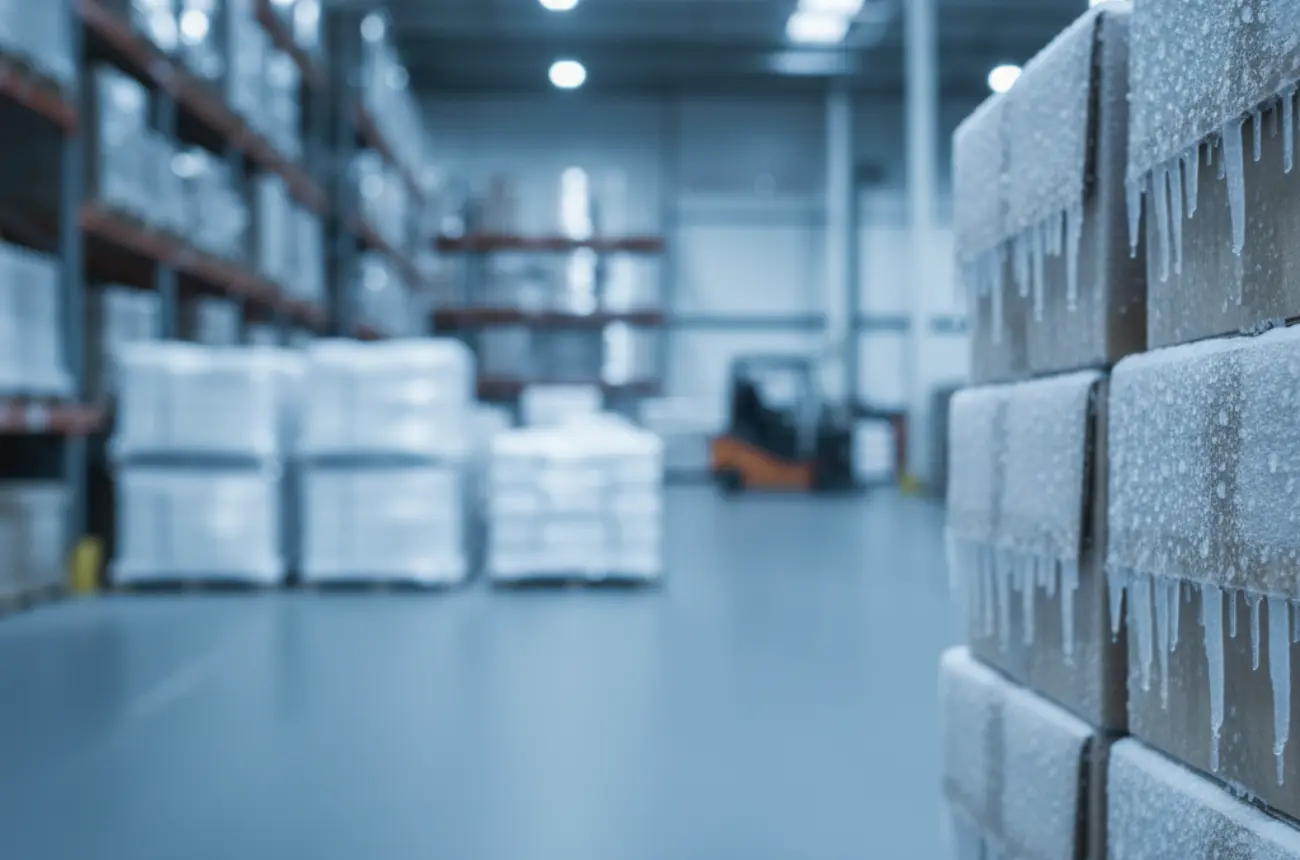
Refrigerated and freezer environments are one of the clearest fits. Every unused cubic foot of conditioned space costs energy, and every minute an operator spends inside a freezer chamber is an occupational safety burden. Shuttle systems address both at once.
Operating temperature ranges for shuttle systems typically extend from -30°C to +50°C, with cold-rated configurations engineered for sustained sub-zero operation and supercapacitor-powered automated systems reaching -40°C[5]. A cold-storage shuttle is a different engineering product from an ambient unit — insulated electronics, sealed bearings, cold-rated lubricants — so specifying the temperature range at RFP time is not optional.
The energy benefit comes from density: eliminating forklift travel aisles reduces the cubic volume of conditioned space required to hold the same pallet count, and replacing in-lane forklift travel with battery-powered shuttles eliminates a continuous source of heat and door-opening cycles. Documented energy reductions in the cold chain industry follow from three compounding effects — reduced cubic volume to cool, fewer and smaller door openings, and reduced reliance on lighting and human-driven equipment inside the cold zone[4]. The labor benefit is the operator’s interaction model: place the pallet at the channel entrance, leave the cold zone, let the shuttle handle in-lane movement. Freezer doors stay closed longer, reducing compressor load on top of the labor savings.
Lithium-ion batteries cannot charge below 0°C, so cold operations either route shuttles to charging stations outside the cold zone or use lane-entrance docking connectors for cable-in-place charging. Supercapacitor systems are unaffected by sub-zero temperatures and exhibit extended operating life at low temperatures[5].
Place the pallet at the channel entrance, leave the cold zone, let the shuttle handle in-lane movement. Freezer doors stay closed longer, reducing compressor load on top of the labor savings.
Food and beverage manufacturing and distribution
Food and beverage operations combine high-volume homogeneous pallet flows with strict product rotation requirements. Shuttle systems support both FIFO and LIFO mode, configurable per lane, letting operators set each channel for the rotation rule appropriate to the SKU it holds. FIFO is essential for dated products; LIFO suits non-perishable buffer storage where last-in-first-out matches production flow. Sanitation profiles also improve: eliminating forklifts inside racking channels removes tire rubber, potential exhaust deposition, and impact damage to product packaging, and deep-lane compaction reduces aisle floor area to clean.
Third-party logistics operators
3PLs present the most nuanced fit evaluation in this category. Shuttle systems perform well for 3PLs with clients that have high pallet counts per SKU, predictable pallet formats, and willingness to dedicate lane depths to specific client SKUs. The shuttle’s modular scalability — add shuttles to the fleet without structural modification — supports incremental onboarding of new client volume.
The risk is lane utilization inefficiency. A 26-pallet-deep lane that holds only 6 pallets of a slow-moving SKU wastes 20 positions of capital investment. For 3PLs serving many small clients with mixed pallet formats and low velocity per SKU, the math does not work. The evaluation question is whether the client mix contains enough high-velocity, same-SKU pallet lanes to justify deep-lane configuration[6].
General manufacturing and retail distribution
Production buffer storage between manufacturing lines and outbound docks is a strong fit — dense, adjacent to the line, LIFO-capable, and free of forklift aisles inside the buffer zone. Retail distribution centers handle the periodic high-density storage needs driven by seasonal demand spikes, and shuttle systems can discharge pallets to downstream case-pick faces to support replenishment cadence.
Where pallet shuttles are NOT the right fit
The technology has genuine boundaries.
Low pallet velocity per SKU. If a lane holds 20 to 40 pallets deep but a given SKU turns only 2 to 3 pallets per week, the lane stays mostly occupied with slow inventory. The density benefit is defeated by the selectivity loss.
Highly variable pallet sizes. Most shuttle systems optimize throughput for uniform pallet depth within a lane; mixed-depth loads typically require the shuttle to lower, reposition, and re-lift for each pallet, with a measurable throughput penalty. Some systems are engineered to handle variable pallet sizes more efficiently — worth confirming with vendors during evaluation if the operation runs mixed formats.
The system around the shuttle
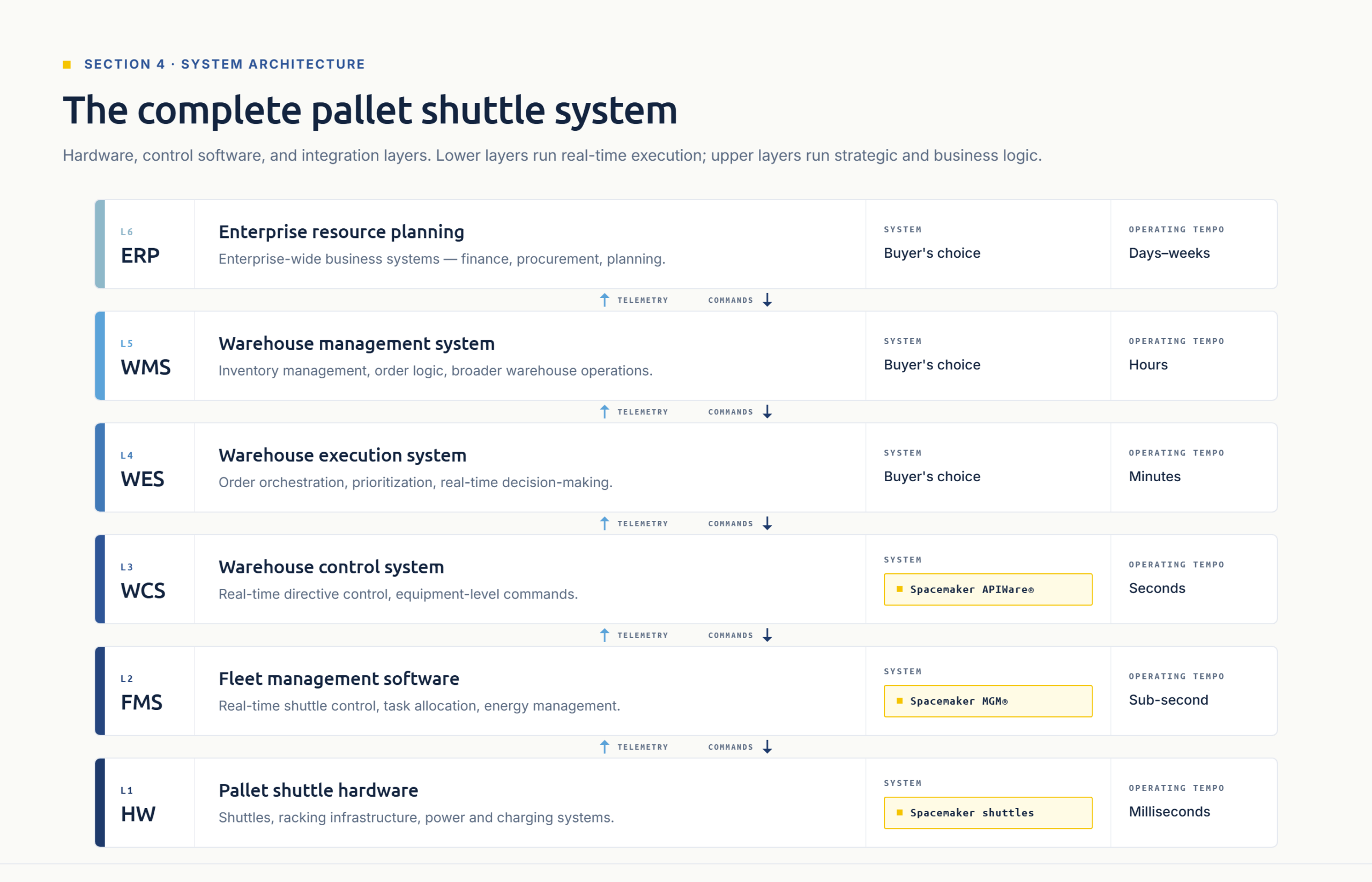
The shuttle itself is one component. The complete system includes fleet management software, integration with the warehouse software stack, power and battery management, and a service and support model. Each is a real engineering surface, not an afterthought.
Fleet management software
Fleet management software coordinates shuttle traffic, allocates tasks, and manages charging schedules. In a single-shuttle installation the software is minimal. In multi-shuttle systems — particularly four-way fleets — the software handles real-time task allocation, traffic management to prevent collisions at lane entrances and cross-aisle intersections, energy management to schedule charging without throughput loss, and exception handling when a shuttle fails or a pallet is misaligned. Operators see status dashboards and historical analytics for capacity planning and predictive maintenance.
WMS, WES, and ERP integration
Integration scope scales with system complexity. A semi-automated standalone shuttle needs no warehouse software integration. A WMS-connected configuration receives inbound and outbound pallet commands and returns location confirmation and inventory updates. A fully automated four-way system uses the full three-layer stack: WMS for inventory and order logic, WES (warehouse execution system) for prioritization and sequencing across the fleet, and WCS (warehouse control system) for real-time command execution at the device level[9].
ERP integration sits one level above. The WMS interfaces with the enterprise resource planning (ERP) system using EDI, XML file exchange, REST APIs over HTTP, or direct connectors — SAP Extended Warehouse Management (SAP EWM) is a common enterprise integration path for SAP ERP and SAP S/4HANA environments, using standardized APIs to connect with adjacent execution systems[11]. Operators evaluating shuttle systems should identify the existing WMS and ERP and confirm API compatibility with shortlisted shuttle systems before signing.
Power systems and battery management
Two power configurations matter. Lithium iron phosphate (LFP) batteries are the default in semi-automated shuttles — typical specifications around 25.6V nominal, with up to 10 hours of ambient runtime, 6 to 8 hours in cold storage, and 1 to 4 hour charge times. LFP chemistry offers higher energy density than lead-acid, 3,000-plus cycle service life at meaningful depth of discharge, and no off-gassing — eliminating the ventilated charging room that lead-acid systems demand[3][5]. Supercapacitors are standard in fully automated systems where the shuttle recharges during transit on a stacker crane or transfer car — power densities up to 10,000 W/kg, service life over 50,000 cycles, and operating ranges from -40°C to +75°C. The tradeoff is lower energy density per unit weight, requiring frequent transit-window recharging in exchange for seconds-long recharge cycles. Lead-acid is legacy.
Three charging strategies are in use: battery swap at shift change, opportunity charging at a docking station between tasks (in cold storage, typically at the lane entrance for cable-in-place connection), and transit charging on supercapacitor systems, which is fully automatic.
Service and support model
The service model is one of the most under-evaluated parts of a shuttle system purchase, and one of the most consequential over a 10-year lifecycle. Standard preventive maintenance cadence is monthly visual inspections, quarterly mechanical and control checks, and annual audits for wear, calibration, and lifecycle planning, with frequency influenced by runtime hours, temperature extremes, and dust or moisture exposure. Fleet management platforms provide real-time error reporting and predictive maintenance alerts based on motor current data, positioning error rates, and battery degradation signals — most fault conditions can be diagnosed remotely.
The question to ask vendors is not whether they offer support; it is where the nearest authorized technician is, what the response-time commitment is for critical failures, and whether spare parts (drive wheels, sensors, lifting arms, battery packs, control boards) ship domestically. Commissioning and training typically run 1 to 2 weeks on site. A 12-month warranty is standard, with extended contracts available.
The question to ask vendors is not whether they offer support; it is where the nearest authorized technician is, what the response-time commitment is for critical failures, and whether spare parts ship domestically.
How to evaluate a pallet shuttle system
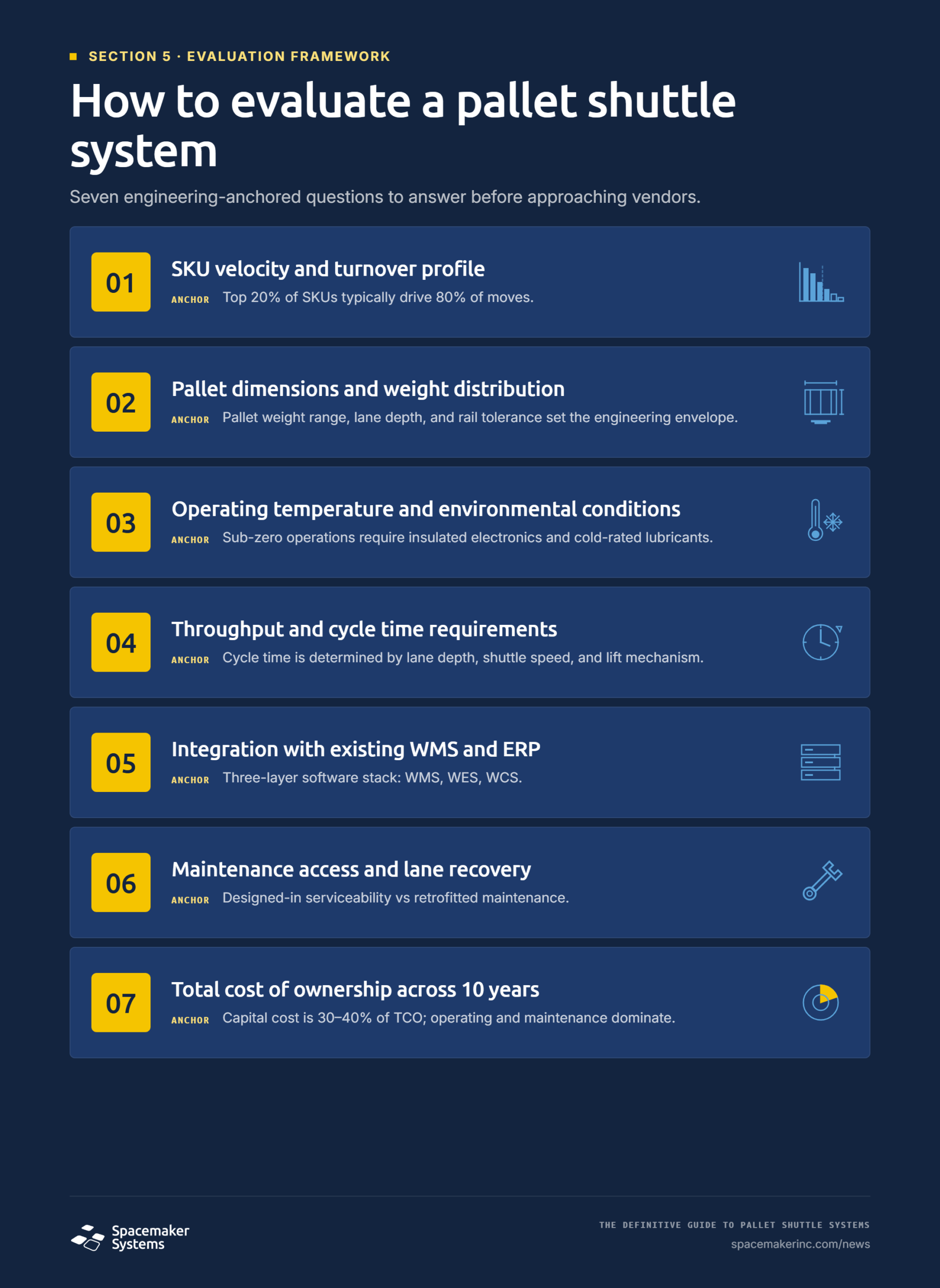
The questions below form a buyer-side framework — the questions an operator should be able to answer before approaching vendors.
1. SKU profile and pallet velocity
Complete an ABC velocity analysis before sizing a system. The top 20 percent of SKUs by movement frequency typically represent about 80 percent of pallet moves[12]. The metric that matters is pallets per SKU per lane — if most SKUs have fewer pallets on hand than the lane depth supports, positions go underutilized. Shuttle systems fit best in operations with 20 to 100 SKUs at the pallet storage level and high pallet counts per SKU[6]. Academic work on AS/RS design with variant lane depths quantifies the same principle: high-throughput SKUs belong in shallower lanes, high-inventory SKUs in deeper lanes[13].
2. Throughput requirements
Calculate peak — not average — pallets in and out per hour. The right benchmark is 95th-percentile demand during peak windows. Per-shuttle cycle time runs 60 to 120 seconds; module-level throughput in fully automated configurations scales with the number of shuttles, lifts, and aisle carriers operating in parallel, and should be modeled against the specific lane depth, dual-command opportunity, and aisle layout of the installation rather than a single headline number. Productivity per shuttle plateaus at roughly 32 pallets deep. Use throughput per occupied square foot as the comparative metric across system options.
3. Cube utilization targets
Set the target before evaluating systems. Selective racking typically delivers 40 to 50 percent of theoretical cube. Drive-in racking reaches 80 percent of floor area but only in LIFO mode. Shuttle systems hit 80 to 90 percent space utilization with neither LIFO nor pitch constraints — two-way configurations land near the drive-in benchmark of around 80 percent, while four-way configurations reach the higher end of the range through cross-aisle flexibility and multi-level access[14]. A design note: two-way installations can lose ground-floor height to rail mounting unless beams are removed at the lowest level and rails are set on the slab.
4. Lane depth and warehouse layout
Below 10 pallets deep, push-back racking can be a lower-CAPEX alternative — though shuttles often win on total cost of ownership when rack damage, safety, and equipment recoverability are factored in. From 10 to 32 pallets deep is the optimum range — 24 to 26 pallets is widely cited as the practical ideal. Beyond 32 pallets, the productivity plateau applies. Other layout inputs the design phase requires: clear ceiling height, column spacing, dock door location, in-rack fire suppression requirements (which affect beam spacing and first-pallet height), local seismic zone, and floor flatness data.
5. Temperature, integration, and service
Confirm the operating temperature range for the intended storage zone at RFP time — cold-storage shuttles are a different engineering product from ambient units. Identify the existing WMS, WES (if any), and ERP, and confirm API compatibility with shortlisted shuttle systems. On service: where is the nearest authorized technician, what is the response-time commitment for critical failures, are spare parts available domestically, and does the manufacturer offer remote diagnostics with direct system access?
6. Total cost of ownership
Capital cost is one component of TCO and rarely the largest over a 10-year lifecycle. The full picture includes capital (racking and shuttles), installation and commissioning, labor savings, maintenance and battery replacement, energy (significantly reduced in cold storage), space (cost per pallet position relative to alternatives), and downtime risk (a function of service model and fleet redundancy). Specific ROI math — payback period, NPV, and sensitivity analysis — depends on operational variables that need to be modeled against the specific deployment.
Frequently asked questions
What is a pallet shuttle system?
A pallet shuttle system is a high-density storage solution in which a battery-powered motorized cart — the shuttle — travels on rails inside a deep-lane racking channel, autonomously transporting pallets to and from storage positions while forklifts or automated cranes operate only at the lane entrance. It is classified within the AS/RS category, bridging fully manual high-density systems (drive-in racking) and fully automated unit-load AS/RS. Typical load capacity is 1,500 to 2,500 kg, with lane depths up to 50 meters and operating temperatures from -30°C to +50°C.
How does a pallet shuttle work?
The operator places a pallet at the lane entrance and selects Load mode via handheld remote, tablet, or warehouse system command. The shuttle lifts the pallet off the lane entrance rail, travels to the deepest available position, deposits the pallet, and returns to the entrance — ready for the next pallet. In Unload mode, the sequence reverses. A separate Compaction mode consolidates partially filled lanes to close gaps and maximize density. Cycle time per pallet runs 60 to 120 seconds depending on lane depth and load.
What is the difference between a two-way and four-way pallet shuttle?
A two-way shuttle moves only forward and backward within a single racking lane and must be transferred between lanes by a forklift or transfer car. A four-way shuttle adds lateral movement via perpendicular wheel sets, allowing it to navigate between lanes autonomously across the full racking grid; vertical level changes use dedicated pallet elevators. Two-way systems suit high-volume, single-SKU lanes; four-way systems suit mixed-SKU operations with higher selectivity needs and built-in fleet redundancy.
Can pallet shuttles operate in freezer environments?
Yes. Cold-storage pallet shuttle configurations are a defined engineering variant — not the same unit as an ambient shuttle. They feature insulated electronics, cold-rated lubricants, and sealed components designed for sub-zero operation. Published ranges extend from -30°C for lithium-ion battery systems to -40°C for supercapacitor-powered configurations. Lithium-ion batteries cannot charge below 0°C, so cold-storage operations route shuttles to charging stations outside the cold zone or use lane-entrance docking connectors. Operators place pallets at the channel entrance and leave the cold zone — the shuttle handles all in-lane movement inside the freezer.
How deep can pallet shuttle lanes be?
The practical design optimum is 10 to 32 pallets deep, with 24 to 26 pallets cited as the practical ideal for most operations. Productivity per shuttle plateaus around 32 pallets deep — beyond that, shuttle cycle time increases without proportional storage gain, and the Wi-Fi control signal may reach the limit of its 250-foot (75 m) range. Channels can be built mechanically deeper, up to around 50 m (164 ft), though channels deeper than 32 pallets should account for reduced throughput per lane.
What is the typical ROI for a pallet shuttle system?
ROI varies widely depending on operational scale, baseline storage configuration, labor cost, energy cost (particularly in cold storage), and integration complexity. Buyers evaluating shuttle systems should focus initially on the TCO framework — capital, installation, labor, maintenance, energy, space, and downtime risk — rather than capital cost alone. ROI math should be modeled against the specific deployment using realistic ranges for each variable.
Do pallet shuttles integrate with my WMS?
Yes — integration depth depends on system configuration. Semi-automated two-way shuttles can operate standalone on remote control with no WMS connection required, or integrate via standard formats (EDI, XML, REST API) when WMS-connected operation is preferred. Fully automated and four-way systems require WMS integration along with WES and WCS layers for task sequencing and real-time device control. ERP integration is typical for enterprise deployments, with SAP Extended Warehouse Management (SAP EWM) being a common enterprise path. Confirm API compatibility with the existing warehouse software stack before vendor selection.
How long does a pallet shuttle installation take?
Installation has three sequential phases: racking structure erection by standard racking installers, rail and shuttle integration by the manufacturer’s commissioning team, and operator training. Commissioning and training typically run 1 to 2 weeks on site. Total project timeline scales with system size — a single-aisle semi-automated installation can complete in weeks; a multi-aisle, multi-level fully automated system with full warehouse software integration may require several months including design, fabrication lead time, and full system commissioning.
References
- Material Handling Institute industry group classification of AS/RS via The New Warehouse
- Floor flatness and ANSI MH16.1 rack standards (RMI Safety)
- LFP battery technology reference for material handling (Flux Power)
- GCCA Cold Chain Innovation Showcase — ASRS and stacker cranes in cold storage (Global Cold Chain Alliance)
- Supercapacitor vs battery energy storage comparison (Knowles Capacitors)
- Deep-lane storage suitability formula (Mallard Manufacturing)
- Throughput Analysis of an Automated Warehouse with Pallet Shuttle (ASCE Library)
- Robotized and Automated Warehouse Systems: Review and Recent Developments (Erasmus University Repository)
- Choosing the Right Warehouse Technology: WMS vs WCS vs WES (Envista)
- History of pallet racking reference (Spider Racking)
- SAP Extended Warehouse Management and 2026 Gartner Magic Quadrant for WMS (SAP News Center)
- Warehouse Slotting Guide: ABC Analysis and Heatmaps (Optioryx)
- AS/RS variant lane depth research (European Journal of Operational Research)
- Clear height and cube utilization analysis (OPSdesign)