
High-throughput beverage distribution powered by shuttle automation
One of the largest beverage distribution operations in the southeastern United States, this Zephyrhills, Florida facility manages high-volume ambient storage across a significant warehouse footprint. The operation required a storage solution that could handle the throughput demands of national beverage distribution — fast pallet cycling, deep-lane density, and minimal forklift traffic inside the racking.
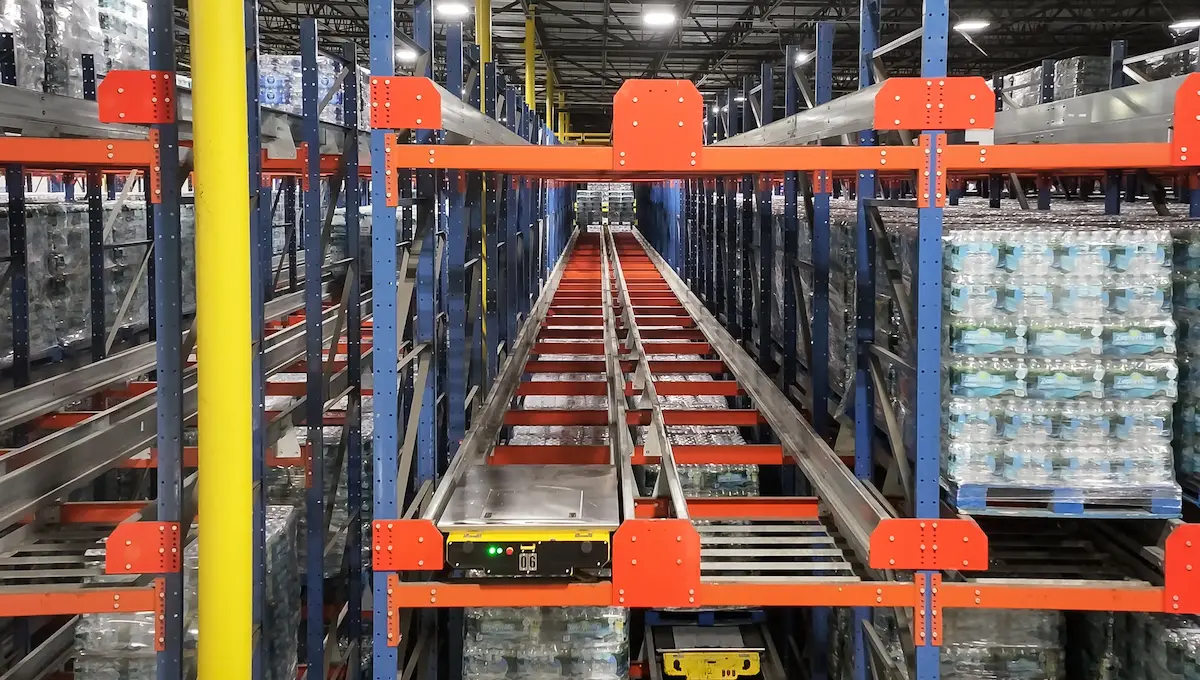
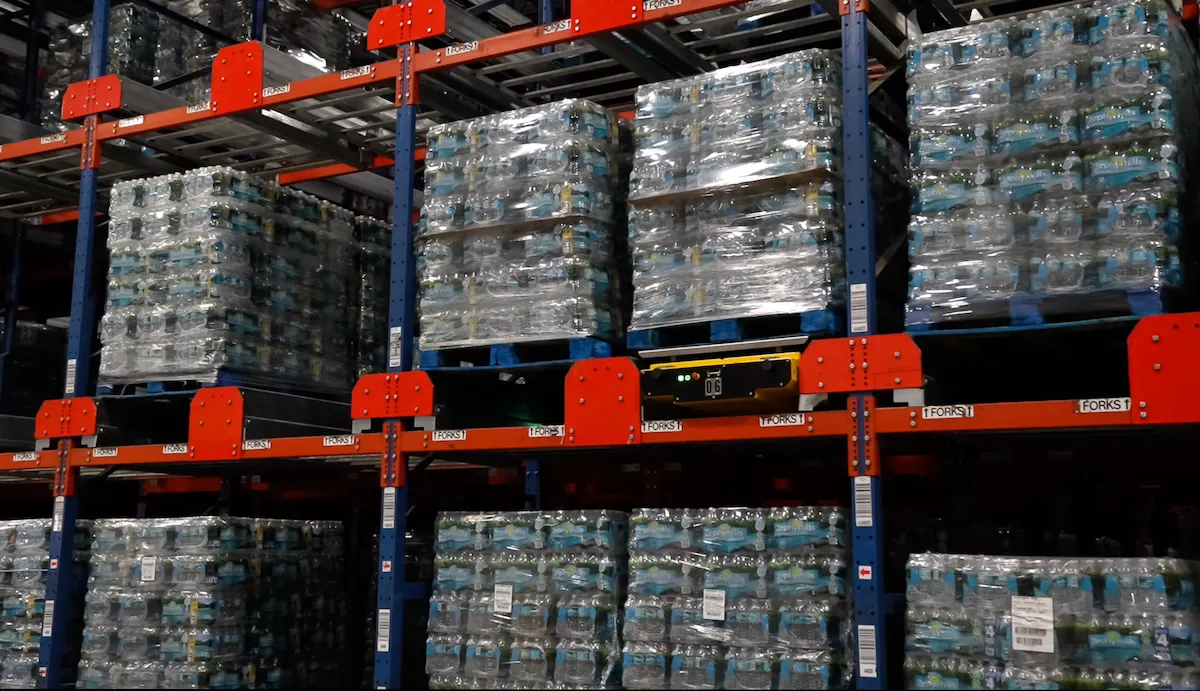
Spacemaker deployed 24 two-way pallet shuttles configured for deep-lane storage, replacing conventional drive-in racking with a semi-automated system that increased storage density while reducing the labor and equipment required to move pallets in and out of the lanes. The installation was completed in 2017 and remains in continuous operation.
Density and cycle time, recovered together.
Beverage distribution at this scale carries throughput value in every cubic foot of warehouse interior. The facility’s previous drive-in racking demanded forklifts inside every lane, slowing pallet cycles and tying up labor during peak demand windows.
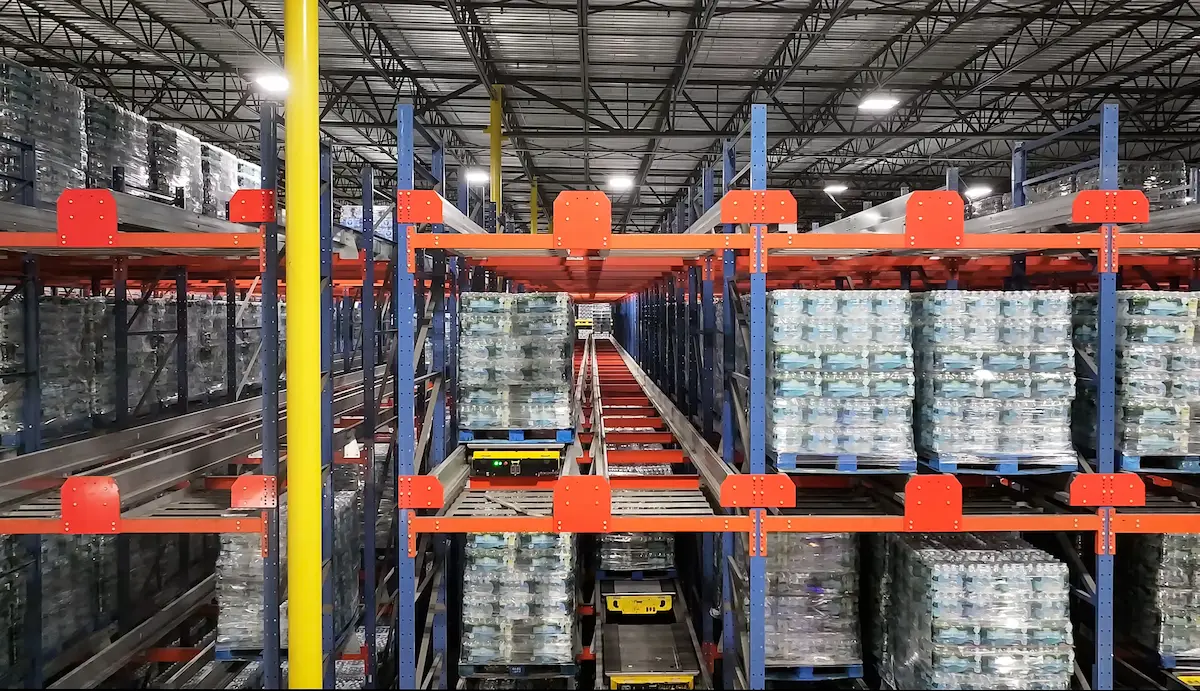
The shuttle deployment recovered density and cycle time at the same time. Twenty-four shuttles cover the full storage footprint and reassign across lanes as inventory mix shifts, giving the operation flexibility no fixed-rack configuration can match. The 2017 installation remains in continuous service today.
Project Photos
See It in Action
National-scale distribution. Legacy racking holding it back.
The facility’s existing drive-in racking required forklifts to enter every lane for pallet placement and retrieval. At the throughput volumes this operation handles, that meant constant forklift traffic inside the rack structure — slower cycle times, higher labor costs, and increased risk of rack and product damage.
The operation needed to increase storage density without expanding the building footprint, while simultaneously reducing the number of forklift movements required per pallet cycle.
24 shuttles. Every lane accessible without a forklift inside the rack.
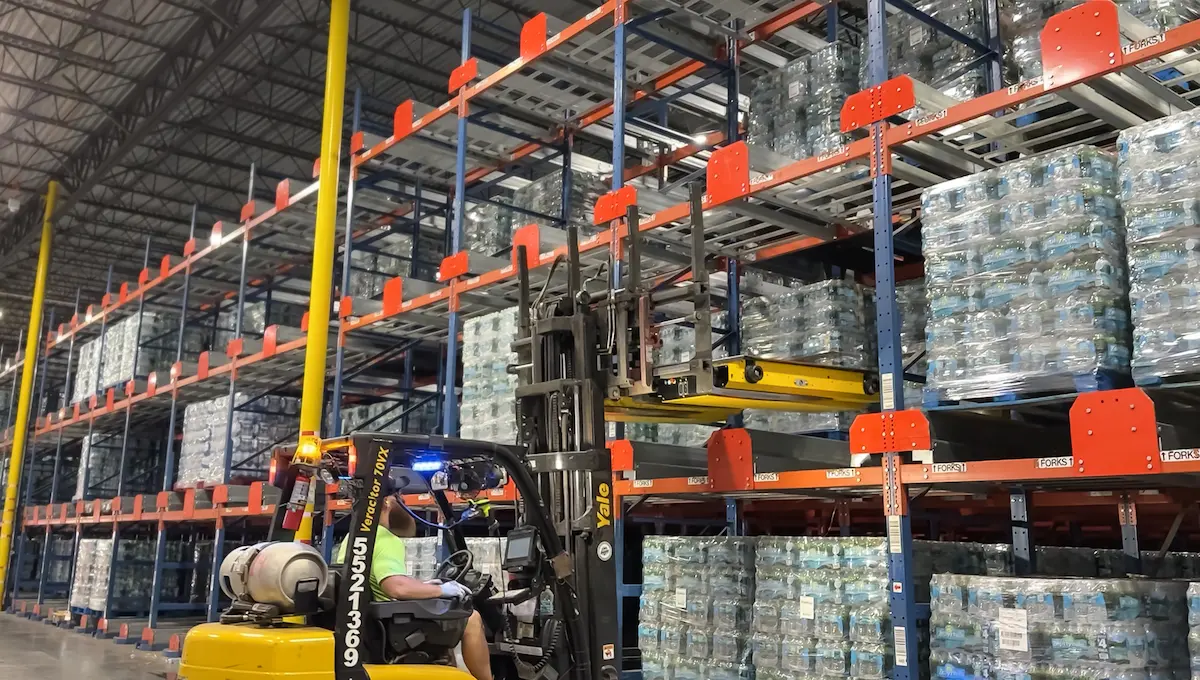
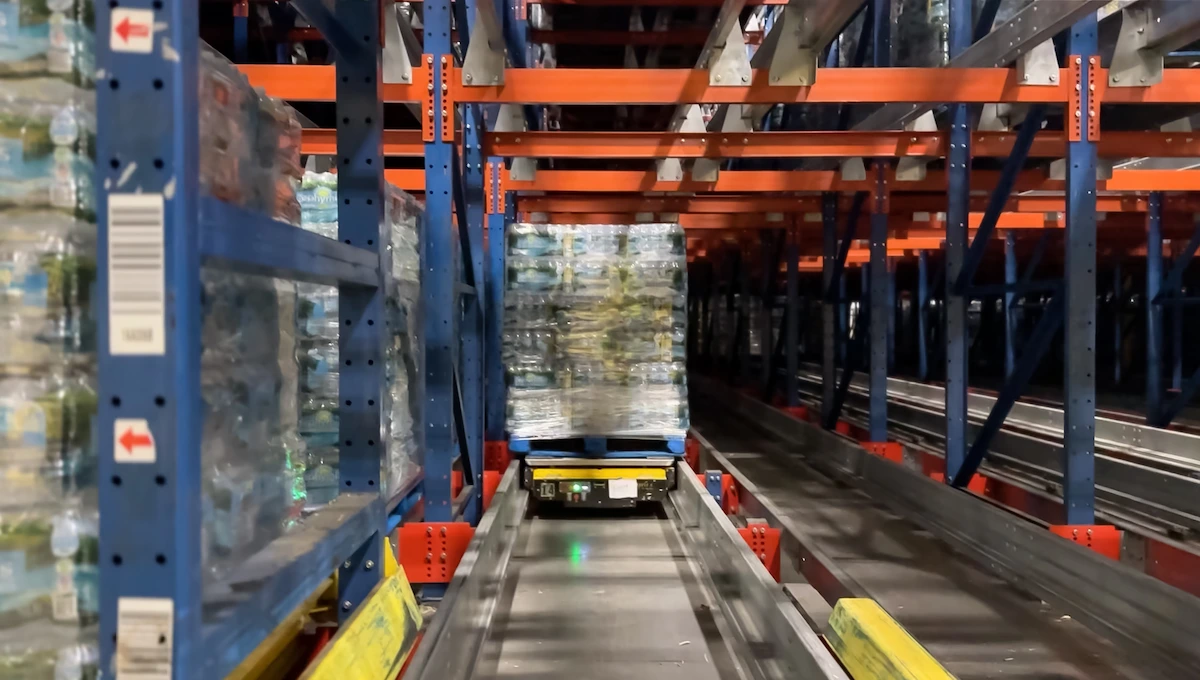
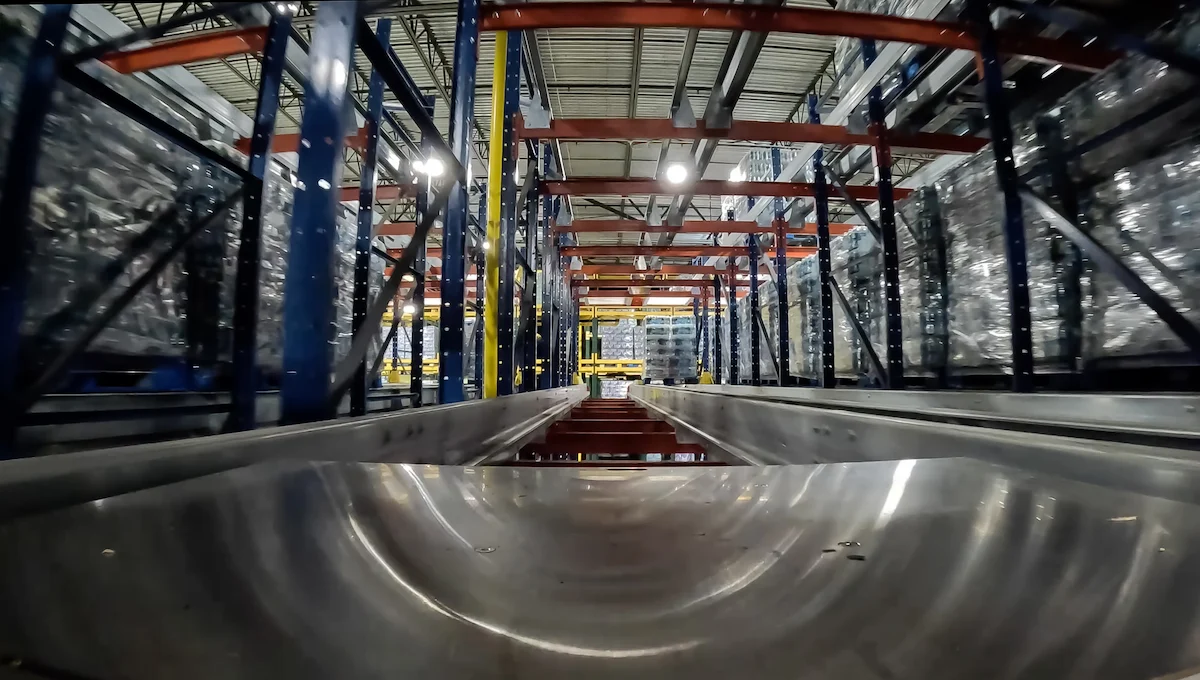
Spacemaker’s two-way pallet shuttles replaced the need for forklifts to enter the racking. Pallets are loaded at the lane face and the shuttle handles placement and retrieval within the lane — eliminating the deep-aisle forklift travel that was constraining throughput.
The 24-shuttle deployment covers the full storage footprint. Shuttles are reassigned between lanes as demand shifts, giving the operation the flexibility to adjust storage allocation without physical reconfiguration.
System Specifications
Warehouse automation in food and beverage distribution
How does warehouse automation improve efficiency in food and beverage distribution?
Warehouse automation in food and beverage distribution focuses on the pallet movement layer — getting product into and out of storage faster, with less labor and less risk of damage. Pallet shuttle systems address this directly by removing forklift traffic from inside the racking, leaving forklifts to handle pallets only at the lane face.
The result is faster cycle times during high-volume periods, lower labor requirements per pallet moved, and reduced wear on rack structures and product. At the throughput levels that beverage distribution operations handle, those efficiency gains compound across every shift.
What is warehouse density and why does it matter in beverage distribution?
Warehouse density is the number of pallet positions a facility holds per square foot of building footprint. Higher density means more inventory in the same building, which translates directly into lower per-pallet storage cost.
Beverage distribution carries volume that scales with seasonal demand and national footprint. Pallet shuttle systems support deep-lane storage that conventional drive-in racking cannot match, recovering capacity inside the existing envelope rather than requiring expansion.
How do pallet shuttles compare to drive-in racking?
Drive-in racking requires forklifts to enter the lane for every pallet placement and retrieval. That model creates congestion at high throughput, increases the risk of rack and product damage, and limits the depth of the lanes that can be safely served.
A pallet shuttle replaces deep-aisle forklift movement with an autonomous carrier that travels inside the lane on rails. Forklifts handle pallets only at the lane face. Density typically increases because lanes can run deeper than a forklift can safely operate, and cycle time improves because the shuttle works while the forklift moves to the next handoff.
Can pallet shuttle automation be retrofitted into an existing warehouse?
Yes. Pallet shuttle systems are commonly installed as retrofits inside existing warehouses, replacing drive-in racking or selective racking with shuttle-served lanes. The Zephyrhills installation is a retrofit of the original drive-in racking, completed without expanding the building footprint.
Retrofit projects depend on rack profile, building height, and operational throughput targets. Spacemaker handles design, structural integration, and commissioning, with shuttle deployment scaled to the lane count and cycle-time requirements of the operation.
What does pallet shuttle automation cost and what is the typical payback period?
Pallet shuttle system cost varies with project size, lane count, shuttle count, and integration scope. Spacemaker scopes pricing per project rather than from a published price list because each installation is engineered to the specific facility.
Payback typically runs three to five years for high-throughput operations, driven by labor reduction, density gains that defer or eliminate building expansion, and reduced rack and product damage compared with conventional drive-in racking. Detailed payback modeling is available during project scoping.
What industries use pallet shuttle systems beyond food and beverage?
Pallet shuttle systems serve any operation that benefits from high-density automated storage. Common deployments include cold-chain pharmaceutical and biotech storage, third-party logistics, e-commerce fulfilment, manufacturing supply, and industrial distribution.
Roughly half of Spacemaker’s installed base operates in cold storage, with the remainder spanning ambient warehouses like the Zephyrhills facility, regulated pharmaceutical environments, and specialized industrial applications.
Let’s discuss your warehouse automation project
From new builds to retrofit installations, our team is ready to design the right pallet shuttle solution for your operation.
Contact us